8 332x500

College of Engineering Hosts a Master’s Thesis Defense on Real-Time Structural Health Monitoring of Buildings Using IoT

The Department of Electrical Engineering at the College of Engineering, University of Wasit, held the defense of a master’s thesis on real-time structural health monitoring of buildings using Internet of Things (IoT)-based sensor networks. The defense was attended by the Dean of the College of Engineering, Prof. Dr. Thaer Saud Al-Ghasham.

The study, presented by Dina Haider Ali, aimed to develop a low-cost system for real-time structural health monitoring. It combines strain sensors with an interface for displaying and recording data, alongside a system for classifying structural conditions and issuing alerts when abnormal conditions are detected.

The system was tested in the laboratory on a reinforced concrete slab and a steel–concrete composite system. The results showed strong agreement between its measurements and those of the reference instrument, with Nash–Sutcliffe efficiency (NSE) values of approximately 0.9886 for the first model and 0.9926 for the second.

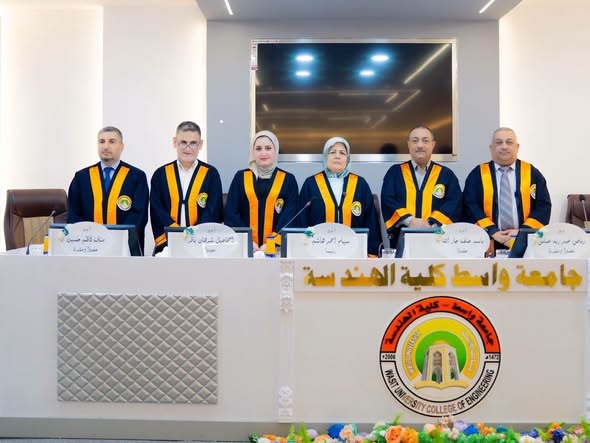
The examination committee comprised:

Assistant Professor Dr. Siham Ahmed Hashim — Chair.

Assistant Professor Dr. Ismail Sharhan Baqir — Member.

Assistant Professor Dr. Basim Khalaf Jarallah — Member.

Assistant Professor Dr. Manaf Kadhim Hussein — Member and Supervisor.

Lecturer Dr. Riyadh Abd Rabbo Abbas — Member and Supervisor.

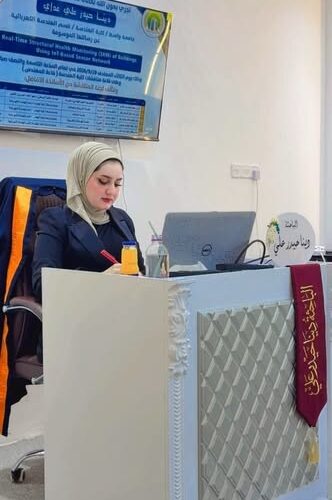
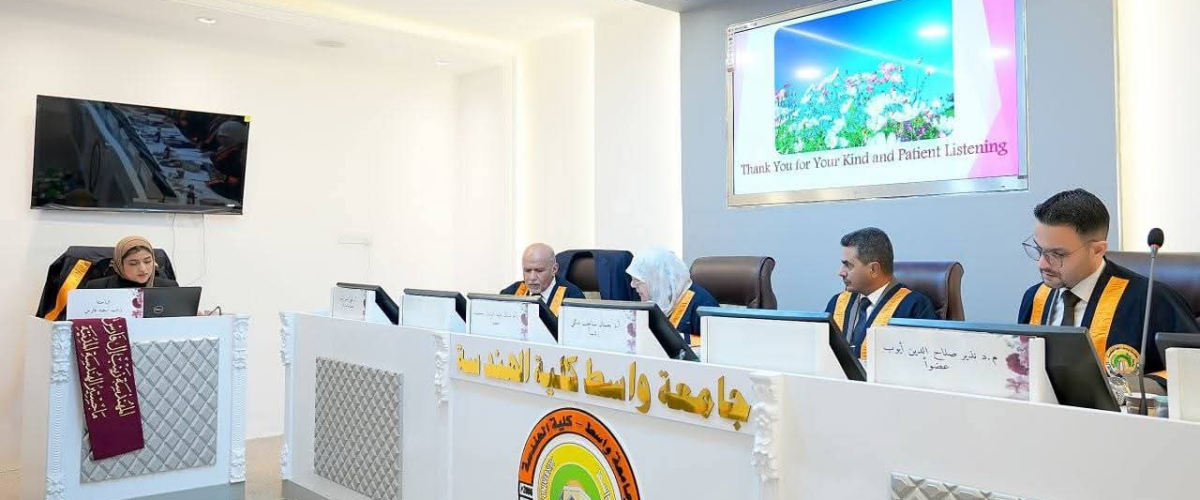
Dina Haider Ali’s master’s thesis defense at the College of Engineering
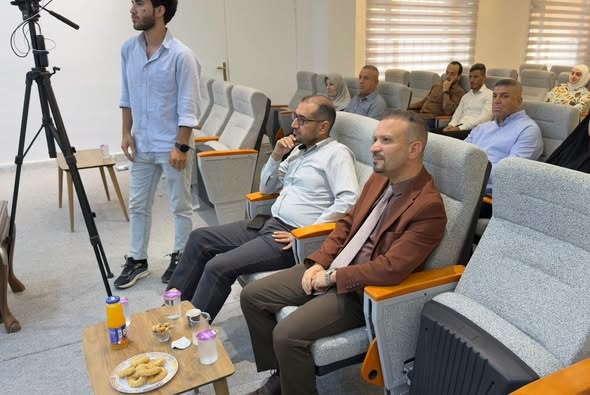
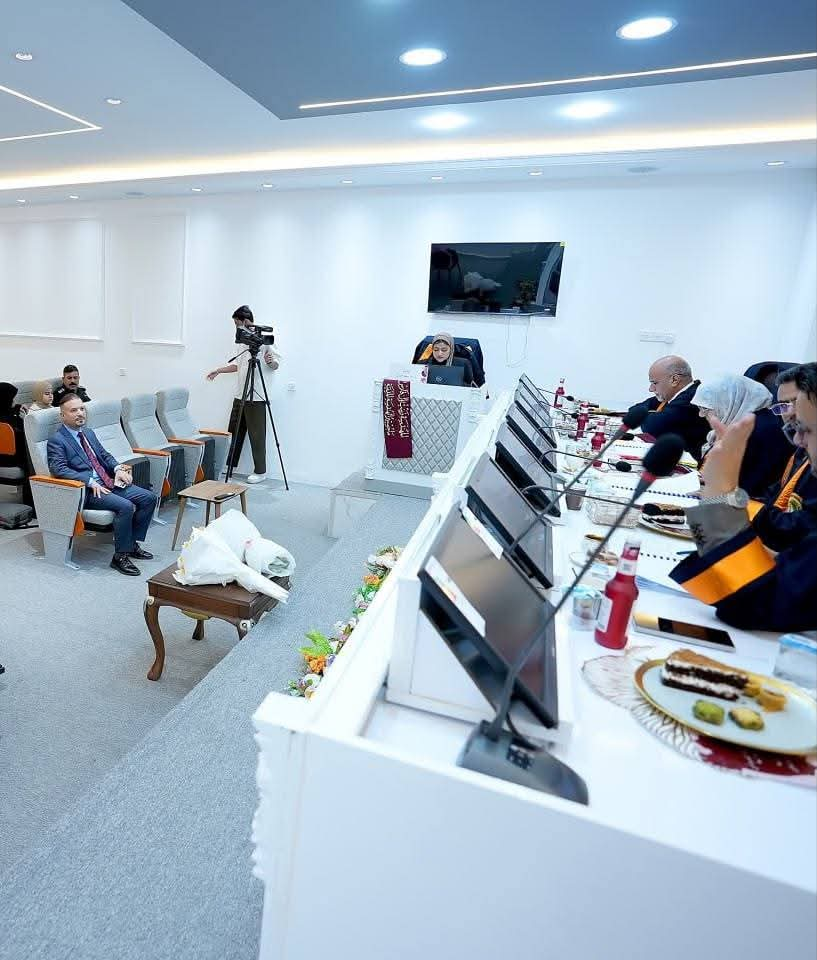
A scene from the master’s thesis defense on IoT-based structural health monitoring
مناقشة رسالة الماجستير للطالبة زينب سعيد فارس في كلية الهندسة بجامعة واسط

College of Engineering Hosts a Master’s Thesis Defense on Flow Patterns and Natural Erosion Downstream of Kut Barrage

The Department of Civil Engineering at the College of Engineering, University of Wasit, held the defense of the master’s thesis entitled “Modeling of Flow Patterns and Natural Erosion Processes Downstream of Kut Barrage Using HEC-RAS and ADC,” submitted by Zainab Saeed Faris.

The study aimed to model and analyze flow patterns, erosion, and sediment deposition in the Tigris River downstream of Kut Barrage. It assessed the effects of excavating 30-m-wide channels through river islands at three depths—1.0 m, 1.5 m, and 2.0 m—compared with the river’s natural condition, to evaluate how these geometric changes affect flow efficiency and sediment transport.

The study used hydraulic, topographic, and sediment data, together with an analysis of bed-sediment samples, to construct the model, run simulations, and compare the different excavation scenarios.

Model calibration showed strong agreement between observed and simulated values, with both NSE and R² reaching approximately 0.983. A Manning’s roughness coefficient of n = 0.030 produced the lowest RMSE value, 20.027, supporting the use of the model to analyze the scenarios under study.

The results showed that channel excavation increased flow velocity in most cross-sections by 7–18% at a depth of 1.0 m and 17–31% at 2.0 m. The 1.5 m scenario produced a non-uniform response because of geometric and morphological differences between cross-sections.

The average effective depth decreased by 5–11% at 1.0 m, 9–18% at 1.5 m, and 16–27% at 2.0 m. In contrast, shear stress increased in most cross-sections by 8–25% at 1.0 m and 18–45% at 2.0 m, while some cross-sections responded differently at 1.5 m.

The results also showed average increases in erosion of 17.1% at 1.0 m, 48.2% at 1.5 m, and 74.6% at 2.0 m. Meanwhile, sediment deposition decreased by an average of approximately 5.2% at 1.0 m, 3.5% at 1.5 m, and 18.5% at 2.0 m. These findings reflect the relationship between hydraulic changes and the flow’s capacity to transport sediment.

The study concluded that, overall, the 2.0 m excavation scenario produced the most consistent response among the scenarios examined in improving flow movement, increasing sediment transport capacity, and reducing sediment accumulation. It also emphasized the importance of periodically monitoring erosion and deposition after excavation works.

The examination committee comprised:

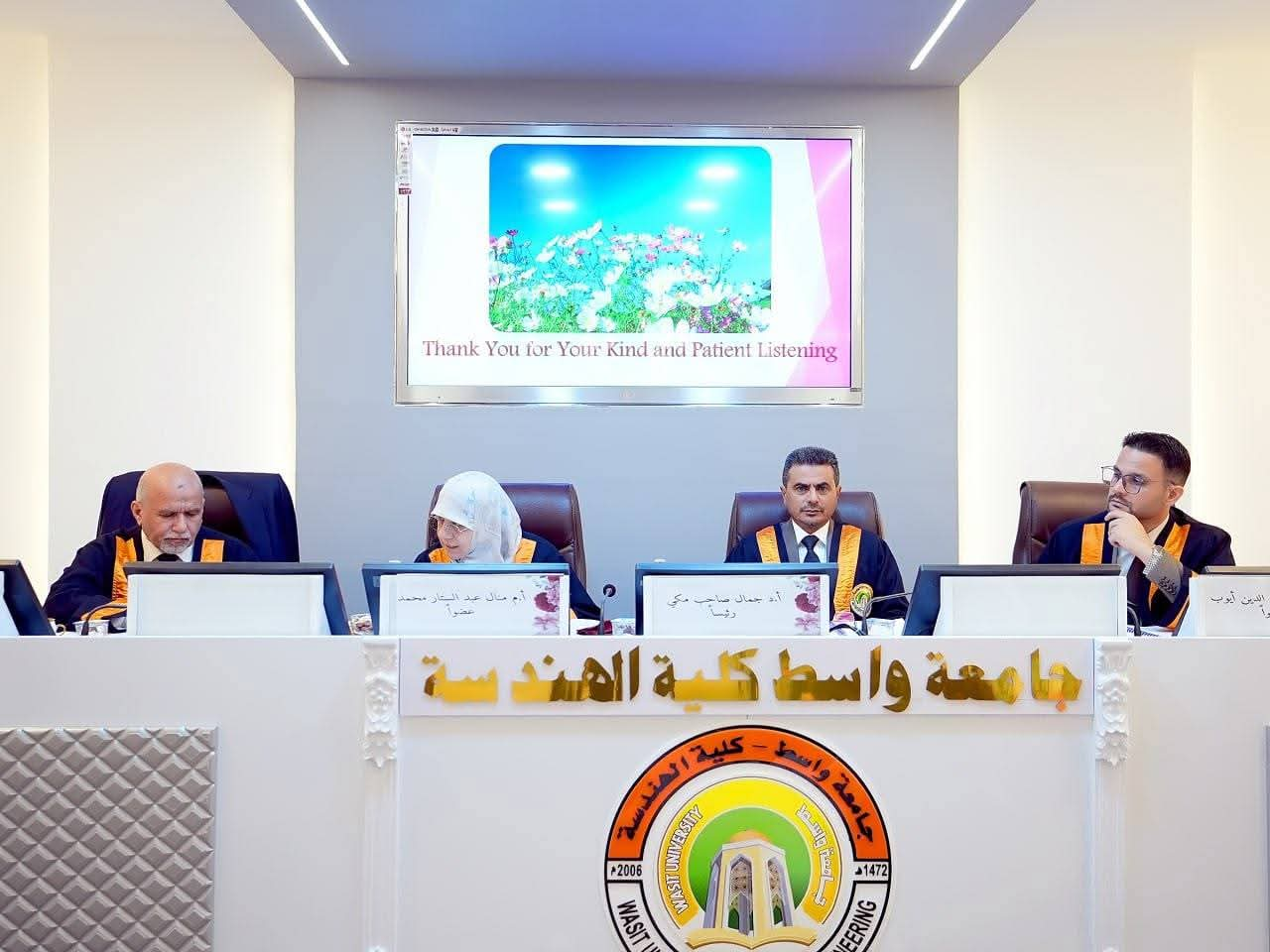
Prof. Dr. Jamal Sahib Makki — Chair.

Assistant Professor Manal Abdul-Sattar Mohammed — Member.

Lecturer Dr. Natheer Salah al-Din Ayyoub — Member.

Prof. Dr. Ali Nasser Hilu — Member and Supervisor.

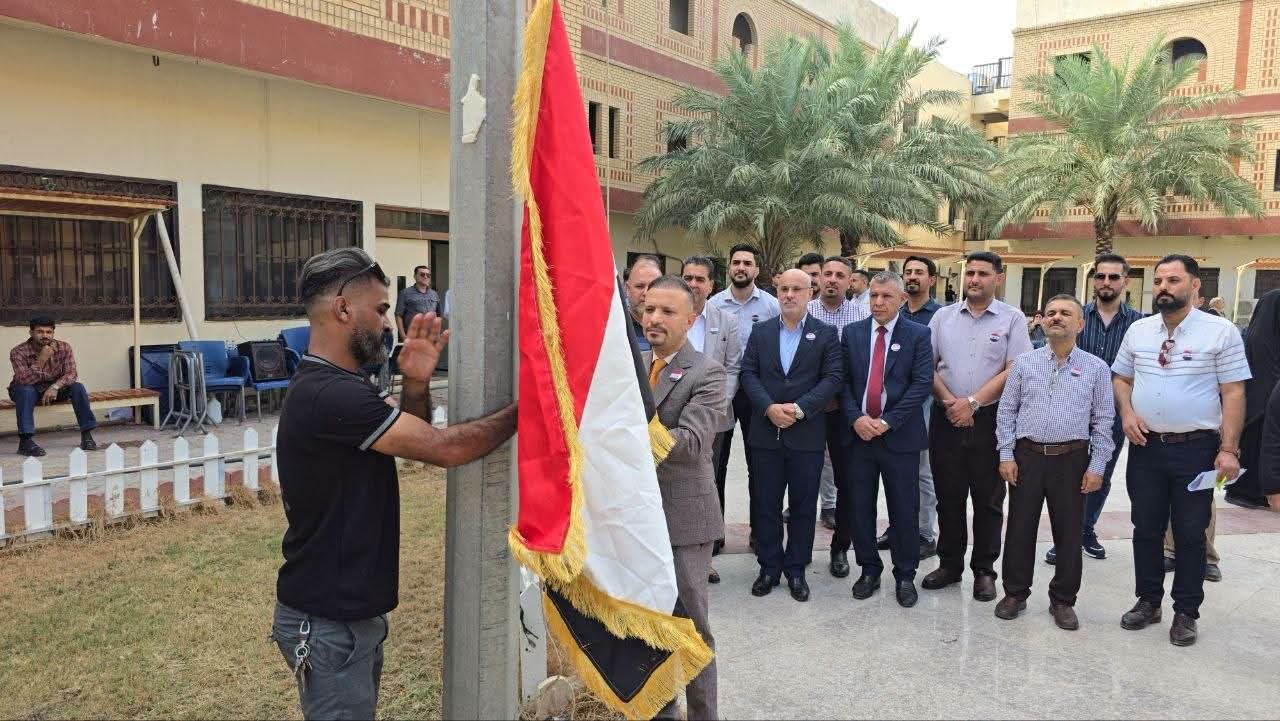
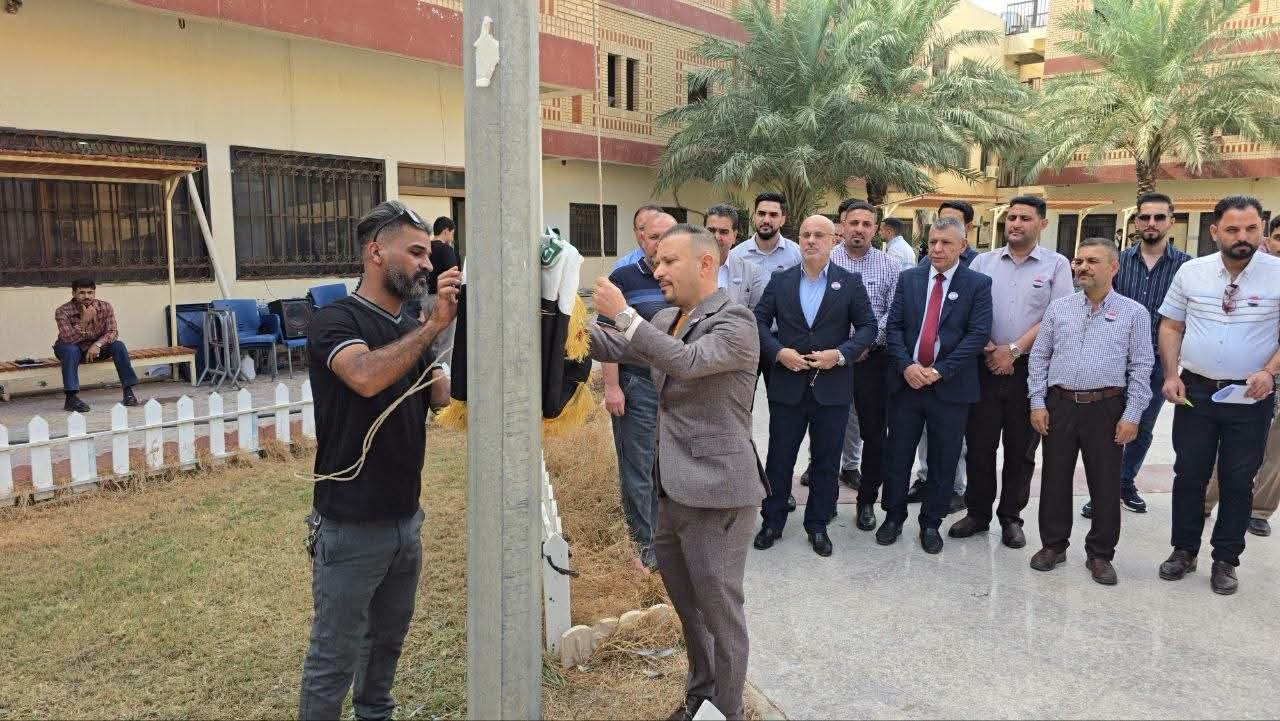
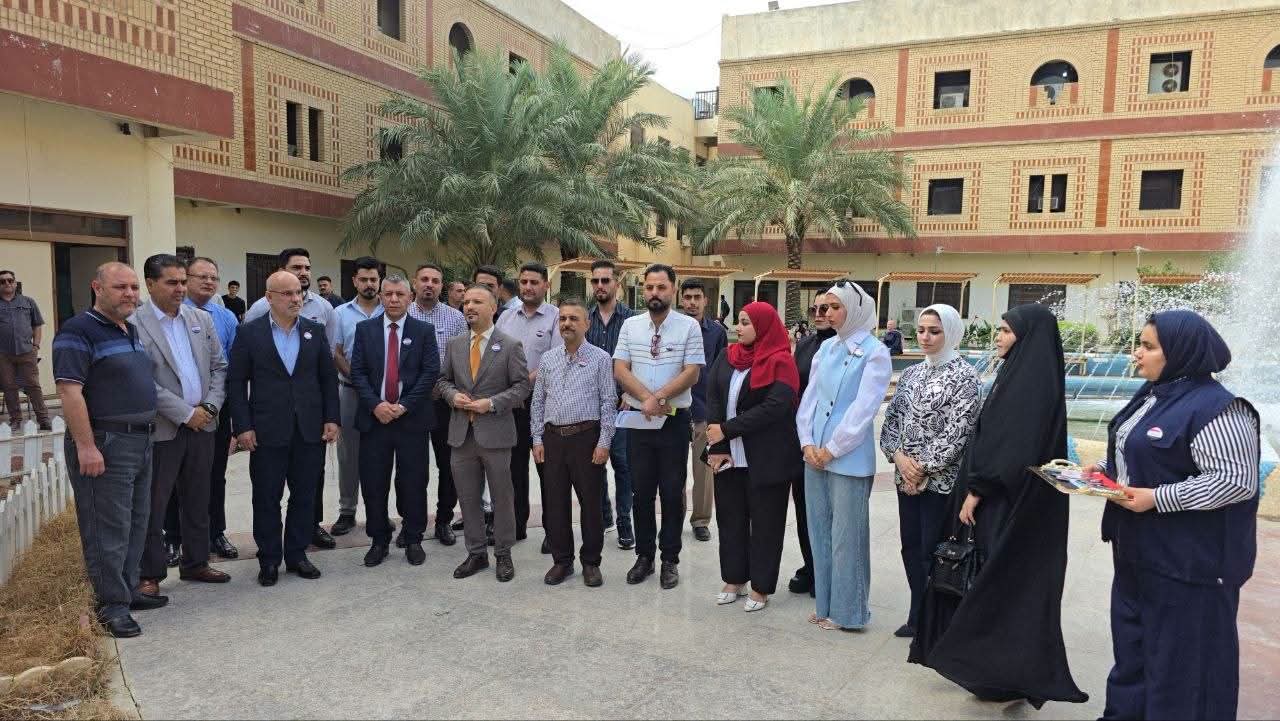
Zainab Saeed Faris’s master’s thesis defense in the Department of Civil Engineering
The examination committee at Zainab Saeed Faris’s master’s thesis defense

Announcement إعلان

اعلان: تجهيز اجهزة مختبريه
تعلن كلية الهندسة عن الحاجة الى تجهيز المواد المختبرية الخاصة بمختبر انترنيت الأشياء والتي تتضمن المفردات الموجودة في جدول الكميات المرفق علما ان اخر يوم لاستلام العروض هو 14-11- 2022
انقر هنا للتحميل

Announcement: Supplying Laboratory Equipment
The College of Engineering announces the need to supply laboratory materials for the Internet of Things lab. The following BOQ, lists the items that are needed. The last day to send in offers is November 14, 2022. Click here to download